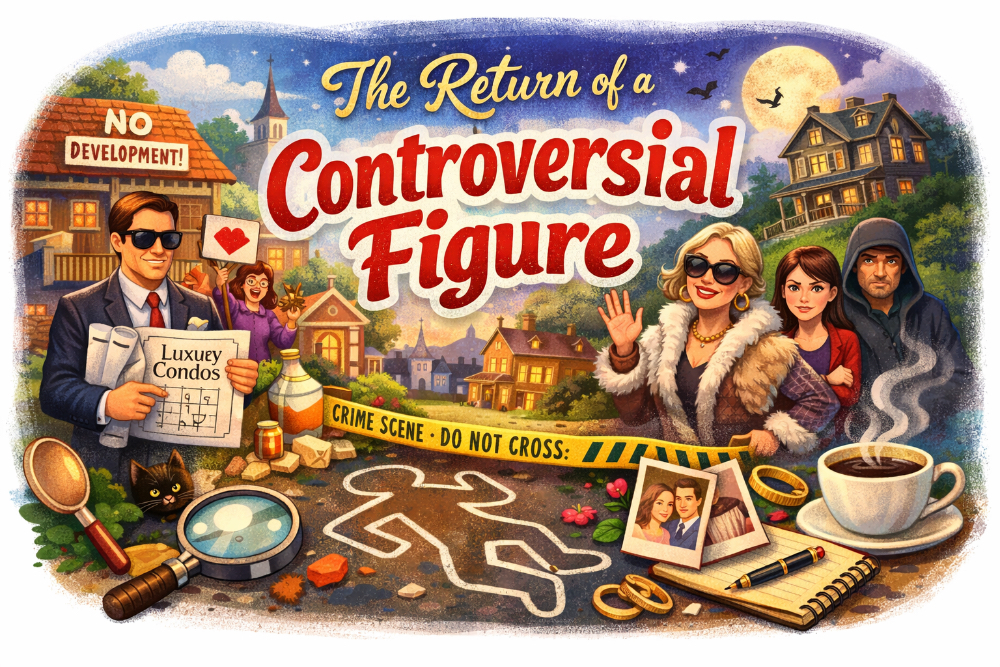
Plot Hook: The Return of a Controversial Figure
Why bringing someone back to town is one of the strongest cozy mystery hooks you can use
There’s something inherently unsettling about a familiar face reappearing after years away—especially when no one is particularly happy to see them.
In a cozy mystery, this setup does a lot of heavy lifting right out of the gate. You introduce tension, history, and motive before the crime even occurs. Then, when that returning figure turns up dead, the entire town becomes a web of suspects.
Let’s break down why this hook works so well—and how to use it effectively.
Why This Cozy Mystery Hook Works So Well
At its core, this trope taps into one of the most powerful elements in cozy mysteries: shared history.
Small towns remember everything.
When someone returns, they don’t arrive as a blank slate. They come burdened with:
- Old grudges
- Broken relationships
- Secrets that never stayed buried
- Choices that affected the entire community
That means your story starts with built-in conflict. You don’t have to create tension from scratch—it’s already there, simmering just beneath polite conversation and forced smiles.
And cozy readers love that contrast:
Warm setting on the surface… complicated, messy truths underneath.
Types of Controversial Returns (With Story Potential)
Not all returning figures are the same. The type of person coming back shapes your suspects, motives, and tone.
- The Ruthless Developer
They’ve come back with plans to “improve” the town—by tearing down beloved landmarks.
Example:
A developer returns to convert the historic town square into luxury condos. Within days, they’re found dead in the very building they planned to demolish.
Built-in suspects:
- The bakery owner whose family business would be destroyed
- The mayor under pressure to approve the deal
- The preservation society president
- A former friend who feels betrayed
Tip: Give the victim at least one reasonable point. If they’re purely villainous, the mystery becomes too obvious.
- The Ex-Spouse With Unfinished Business
They return to settle something—money, property, or emotional debts.
Example:
An ex-husband shows up demanding the sale of a shared property. The next morning, he’s found dead in the garden.
Built-in suspects:
- The current spouse
- The ex who “benefits” from their death
- Children caught in the middle
- A lawyer who knows too much
Tip: Layer emotional complexity. Not all resentment is loud—quiet bitterness can be far more interesting.
- The Disgraced Hometown Celebrity
They left in scandal—and now they’re back, claiming innocence or attempting a comeback.
Example:
A once-famous TV personality returns to clear their name at a local event. Before they can speak publicly, they’re murdered backstage.
Built-in suspects:
- Former friends who felt abandoned
- Someone who knows the truth about the original scandal
- A rival who benefited from their downfall
- A fan whose admiration turned sour
Tip: Tie the past scandal to the present murder. The two should echo each other.
- The Estranged Family Member
They never forgave—and never forgot.
Example:
A sibling returns after decades away, stirring up inheritance disputes and long-buried accusations. Days later, they’re found dead in the family home.
Built-in suspects:
- Other family members protecting secrets
- Someone written out of a will
- A caretaker with inside knowledge
- A childhood friend who knows what really happened years ago
Tip: Family dynamics are gold in cozy mysteries. Use layered loyalties and shifting alliances.
Structuring This Hook in Your Cozy Mystery
To get the most out of this setup, timing and reveal matter.
- Introduce the Return Early
Bring the controversial figure into the story before the murder.
Let readers see:
- Awkward reunions
- Passive-aggressive dialogue
- Subtle hostility
This builds anticipation. Readers will start forming theories immediately.
- Seed Multiple Conflicts
Don’t limit the tension to one person.
Make sure:
- Several townspeople have valid reasons to dislike the return
- The victim interacts with multiple characters
- Each interaction reveals a different layer of their past
This ensures a wide suspect pool.
- Show, Don’t Tell the History
Avoid info-dumps about “what happened years ago.”
Instead:
- Let characters reference shared memories indirectly
- Use objects (old photos, buildings, heirlooms) as clues
- Reveal the past in pieces through dialogue and discovery
- Tie the Past to the Murder
The best version of this trope connects past and present tightly.
Ask:
- Did the victim come back because of something unfinished?
- Did they threaten to reveal a secret?
- Did someone fear history repeating itself?
The murder should feel like the inevitable result of unresolved tension.
Layering Clues and Red Herrings
This setup is ideal for misdirection.
Effective Clues:
- A letter or email hinting at why they returned
- A tense argument witnessed by others
- Evidence of a secret meeting
Red Herrings:
- A character who seems to have the strongest motive
- Misinterpreted past events
- A “villainous” personality that distracts from subtler suspects
Tip: Spread suspicion evenly. In a cozy, readers expect multiple viable suspects—not an obvious culprit.
Adding Cozy Flavor Without Losing Tension
Even with heavy backstory, keep the tone grounded in cozy elements:
- Community gossip that reveals clues
- Amateur sleuth conversations over coffee or baked goods
- Town events disrupted by the return
- Personal stakes for your sleuth (they knew the victim—or someone who did)
The key is balance:
The town feels warm and familiar… but the relationships are anything but simple.
Common Pitfalls to Avoid
- Making the victim universally hated
If everyone despises them equally, the mystery loses nuance. - Revealing too much too soon
Let the past unfold gradually. - Disconnecting past and present
If the murder could happen without the backstory, the hook isn’t doing its job. - Overcomplicating the history
Keep it layered but clear. Confusion kills engagement.
Final Thought
A controversial return works because it activates the entire town.
Everyone has a memory. Everyone has an opinion. And at least a few people have something to hide.
When that person ends up dead, the question isn’t just “Who killed them?”
It’s:
“What really happened all those years ago—and who was willing to kill to keep it buried?”
Used well, this hook doesn’t just start your mystery.
It fuels it all the way to the final reveal.
Happy Writing,
Patti Ann

You May Also Like

7 Plot Hooks That Instantly Grab Readers in Cozy Mysteries

Plot Hook: The Body at the Worst Possible Event